
By Kevin Kyser · K & K Septic
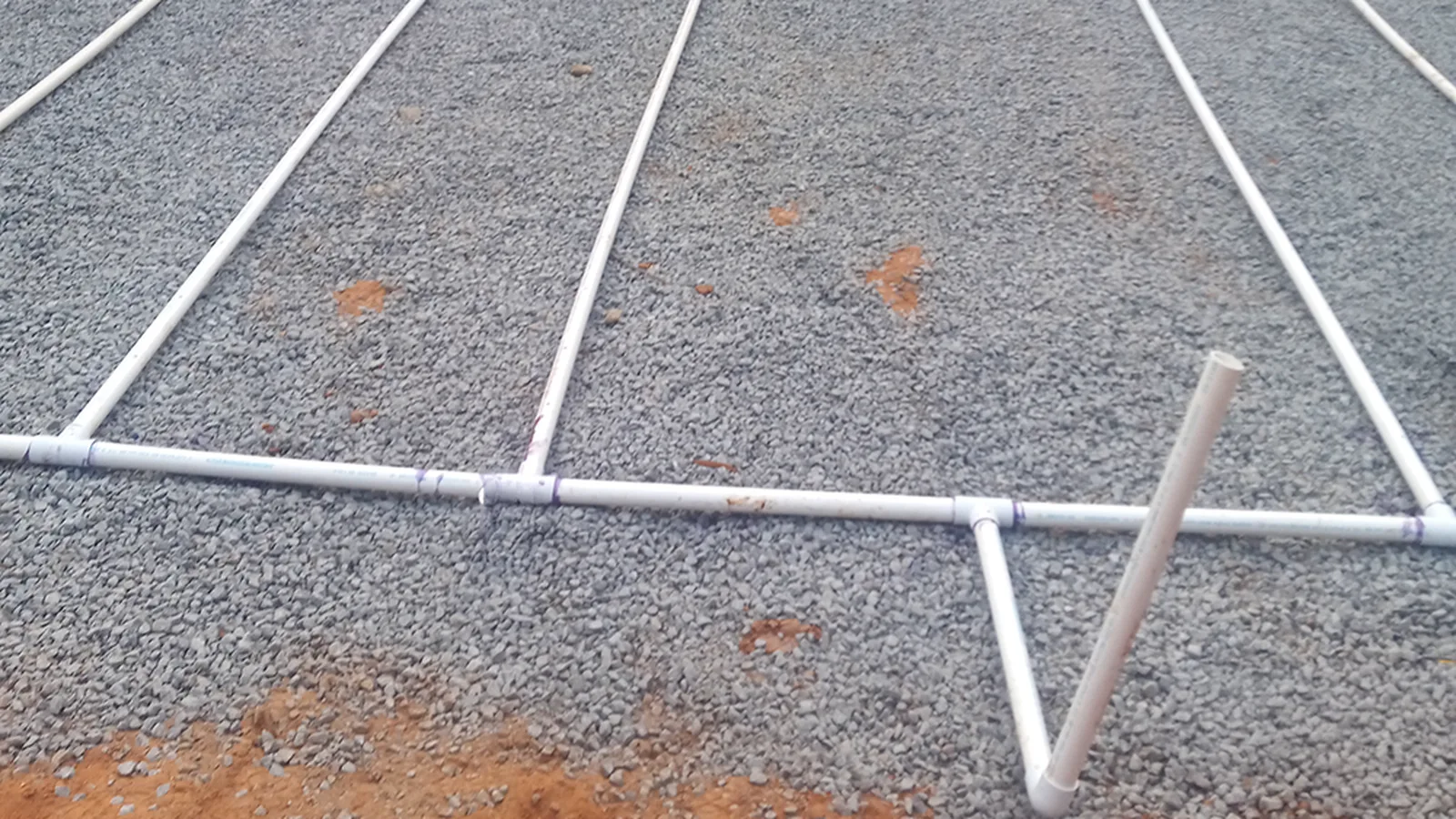
I've been installing and repairing septic systems in Alabama for 25 years, and I've heard this part of a septic system called just about everything.
Drainfield.
Drain field.
Field lines.
Lateral lines.
Leach field.
Leach lines.
Absorption field.
Sometimes a homeowner just points toward the backyard and calls it “the lines.”
Most of the time, we're all talking about the same general part of the septic system.
There are some differences in what the terms technically mean, but if you've ever wondered why one person says “field lines” and somebody else says “drainfield,” you're not alone.
So let's make it simple.
The Drainfield Is More Than Just Some Pipes in the Yard
Most people think of the septic tank as the septic system.
It's not.
The tank is only one part of it.
Wastewater leaves your house and enters the septic tank. Solids settle in the tank while the liquid portion eventually leaves the tank and travels toward the drainfield.
The drainfield is where that wastewater is distributed into suitable soil so the soil can continue the treatment process.
That's an important point:
The soil is part of your septic system.
Those pipes in the yard aren't simply getting rid of water. The whole system depends on wastewater being spread over enough suitable soil for that soil to do its job.
That's why soil conditions matter so much when a septic system is designed.
So What Are Field Lines?
When we talk about field lines or lateral lines, we're usually talking about the individual lines or trenches that make up the drainfield.
Think of it this way:
The drainfield is the whole area. The field lines are the individual lines inside it.
That's not a perfect definition for every type of septic system ever built, because there are several different ways wastewater can be distributed.
But for a homeowner trying to understand a conventional septic system, it's a pretty good way to think about it.
Here in Alabama, you'll hear “field lines” a lot.
Someone may tell me:
“My field lines are bad.”
“The field lines are wet.”
“I think one of my lateral lines has collapsed.”
They're describing a problem somewhere in the wastewater disposal portion of the system.
What About a Leach Field?
“Leach field” is another common name for a drainfield.
You'll see that term a lot online, and it's used in many parts of the country.
Some people also say “leach lines.”
I tend to hear drainfield and field lines more often in the kind of work we do in Alabama, but if somebody calls me about a bad leach field, I know what they're talking about.
You may also run across more technical terms like absorption field, soil absorption system, or effluent disposal field.
Those names may sound different, but they're describing the same basic job: getting septic tank effluent into suitable soil where treatment and dispersal can continue.
Why Does the Name Matter?
Most of the time, it doesn't.
If you call me and say your leach lines are giving you trouble, I'm not going to correct your vocabulary.
I'm going to try to figure out what's wrong with your septic system.
But understanding the difference between the tank and the drainfield does matter.
That's because homeowners sometimes assume every septic problem is a tank problem.
It isn't.
If the drainfield isn't accepting wastewater properly, emptying the septic tank doesn't repair the field.
If a lateral line is damaged, pumping the tank doesn't repair the line.
If water is saturating the disposal area because of drainage problems, pumping the tank doesn't change the soil conditions.
There are times when a tank needs pumping as part of proper maintenance or before certain work can be done. But pumping and repairing are two different things.
K & K Septic doesn't provide septic pumping. We install and repair septic systems, including problems involving tanks, pumps, field lines, and drainfields.
If your problem is something that needs a pumping company, I'll tell you that.
If it's something that needs repairing, then we can start figuring out what actually failed.
How Do You Know When a Drainfield Has a Problem?
This is where I want homeowners to be careful about diagnosing the system themselves.
There are signs that can point toward a drainfield problem:
- Slow drains throughout the house
- Toilets that gurgle or don't flush normally
- Sewage backing up into the house
- Sewage odors outside
- Wet or unusually soggy ground around the drainfield
- Wastewater surfacing over the field
- Grass growing unusually green or thick over one part of the field
- Problems that seem to get worse after extended wet weather
Those symptoms tell me there is something worth investigating.
They don't automatically tell me that the entire drainfield has failed.
That's an important difference.
I've seen septic problems blamed on field lines that turned out to be something else. I've also seen homeowners put off an obvious field problem until sewage was coming to the surface.
A good septic repair starts with figuring out what is actually wrong.
Not guessing.
Can Field Lines Be Repaired?
Sometimes.
It depends on what has happened.
A line can be damaged by roots, crushed by heavy equipment, disturbed by construction, or have another localized problem that may be repairable.
Other times, the issue isn't one broken line.
The disposal area may no longer be working properly because of age, soil conditions, saturation, improper installation, overloading, or some combination of problems.
That's when experience matters.
There's a big difference between repairing something that's broken and putting a temporary patch on a system that has reached the end of its useful life.
My job is to figure out which situation we're dealing with.
Protect Your Drainfield
One of the best septic repairs is the one you never have to make.
Once you know where your drainfield is, protect it.
Don't build a garage, swimming pool, patio, or other structure over it.
Don't pave over it.
Don't routinely drive cars, tractors, or heavy equipment across it.
Don't plant large trees directly over the field where roots can become a problem.
And pay attention to where rainwater goes.
Roof drains and surface water shouldn't be directed onto the drainfield. The soil needs to accept wastewater from your septic system, and keeping unnecessary water away from the area helps it do that job.
A lot of people don't think about their drainfield because they can't see it.
That's actually when a septic system is at its best.
You flush the toilet, take a shower, wash clothes, and never give the system a thought.
But under that patch of grass is a working part of your home's wastewater system, and protecting it can save you a lot of trouble later.
Whatever You Call It, It Has an Important Job
Drainfield, drain field, field lines, lateral lines, leach field, absorption field — don't get hung up on the terminology.
The important thing to understand is that your septic tank and your drainfield work together.
A healthy tank can't make up for a failed drainfield, and a good drainfield can't overcome every problem happening upstream.
When something isn't working, the goal should be to find the cause before deciding on the solution.
That's the approach I've taken for 25 years.
If you're having trouble with field lines, a drainfield, or another part of your septic system in Alabama, give K & K Septic a call. Tell us what's happening, even if you aren't sure what to call it.
We'll know what you mean.
Learn more about our septic system repairs and septic system installation, or browse more articles from Kevin.